

Healthcare
From 16 Fragmented Sites to One Drupal Multisite serving 14M+ monthly visitors

The Challenge
16 content models, 1 platform, a 4-month deadline
Apollo had already merged its city sites under one domain. Behind the scenes, each section still followed the structure of the site it came from. A doctor profile in one city looked and behaved differently from a doctor profile in another. Content teams had no shared model to work from.
The platform also had to carry a heavy patient workload. Booking appointments, finding a doctor, buying health checks, and reaching Apollo's call centres all ran through the site. Every one of these flows depended on Apollo's existing backend systems.
Then there was the deadline. Apollo wanted the full rebuild live in three to four months.
The brief came down to four requirements:
- Content fragmentation: 16+ inconsistent site structures had to move into one content architecture with zero content loss.
- Integration risk: Bookings, health packages, and lead capture had to connect to Apollo’s backend with zero duplicate business logic in the CMS.
- Governance gaps: Each city team needed full ownership of its own pages, with strict boundaries between regions.
- Scale and discoverability: The platform had to handle millions of monthly patient visits and improve organic search visibility.
The Solution
A governed Drupal multisite built around Apollo’s existing systems
Platform decision: WordPress to Drupal
The brief asked a direct question: was Apollo on the right CMS? The site ran on WordPress. Specbee recommended moving to Drupal.
- Structured content model: Hospitals, doctors, specialties, and treatments live as content types with defined fields. The data is filterable, linkable, and searchable.
- Native access control: Drupal’s roles and permissions restrict editing down to individual content. Regional governance runs on core features, with zero custom access code.
- Future-ready architecture: Apollo can add regions, services, and integrations without another replatforming cycle.
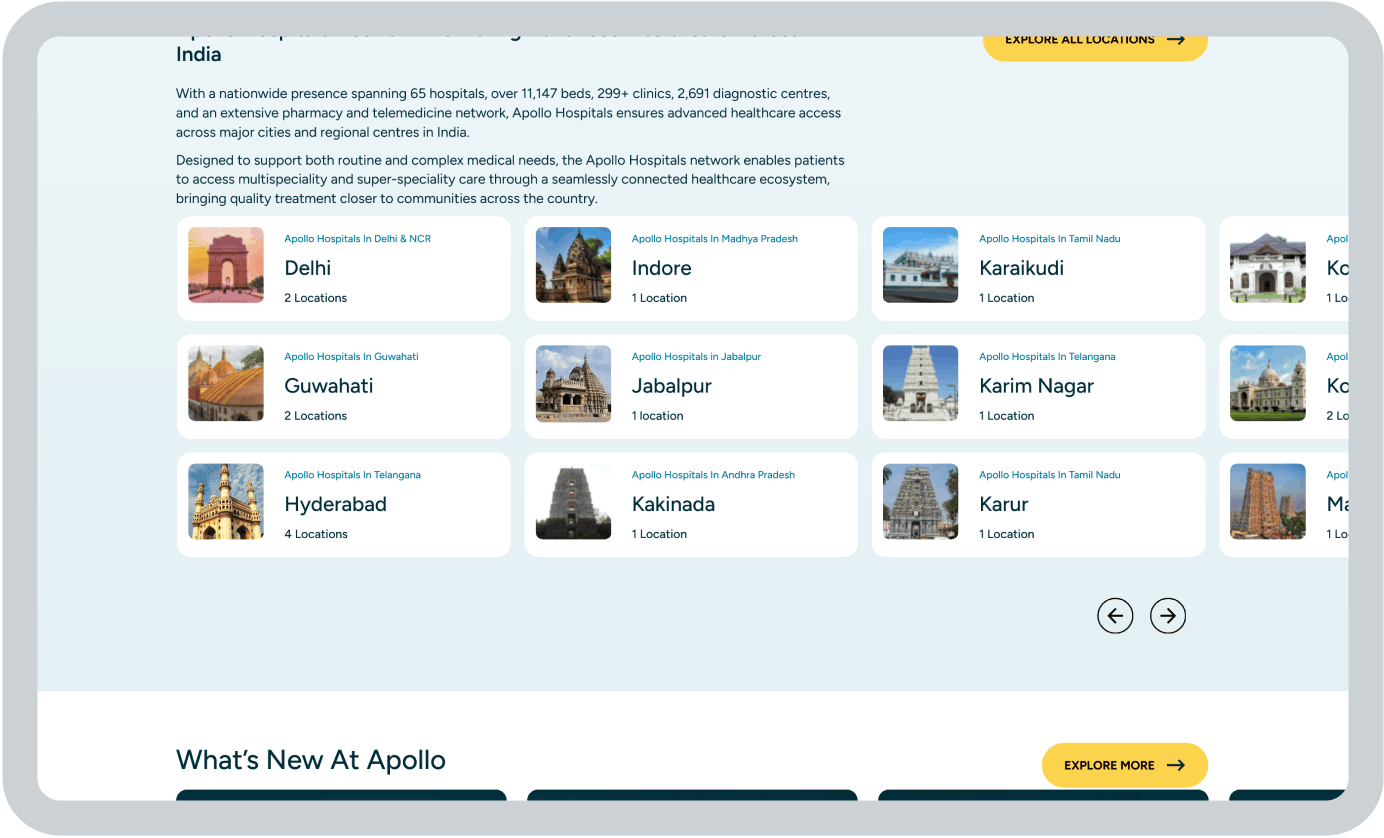
Unified content architecture across 16+ regions
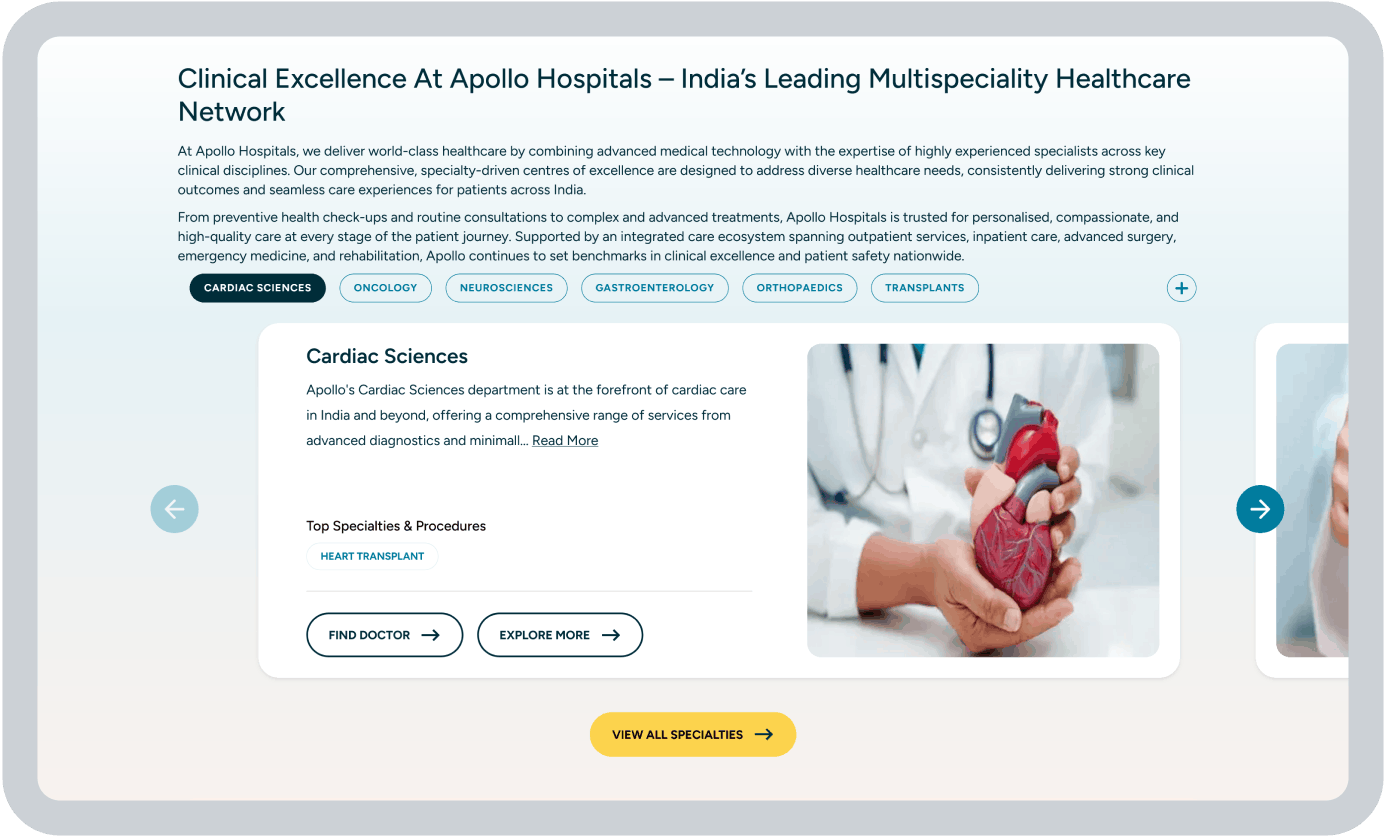
Specbee audited how each regional site stored content. The team then defined one enterprise content model for all of them.
- Standard content types: Hospitals, doctors, specialties, treatments, and health packages each got one definition used across every region. A cardiology page in one city now follows the same structure as a cardiology page in any other.
- Shared fields and relationships: A doctor profile links to a hospital, a specialty, and a city in the same way everywhere. This lets patients move from a specialty to the right doctor to the nearest hospital in a few clicks.
- Reusable templates: Regional teams fill in fixed templates rather than designing pages from scratch. Every city section looks and behaves consistently, and new pages go live faster.
Enterprise content migration
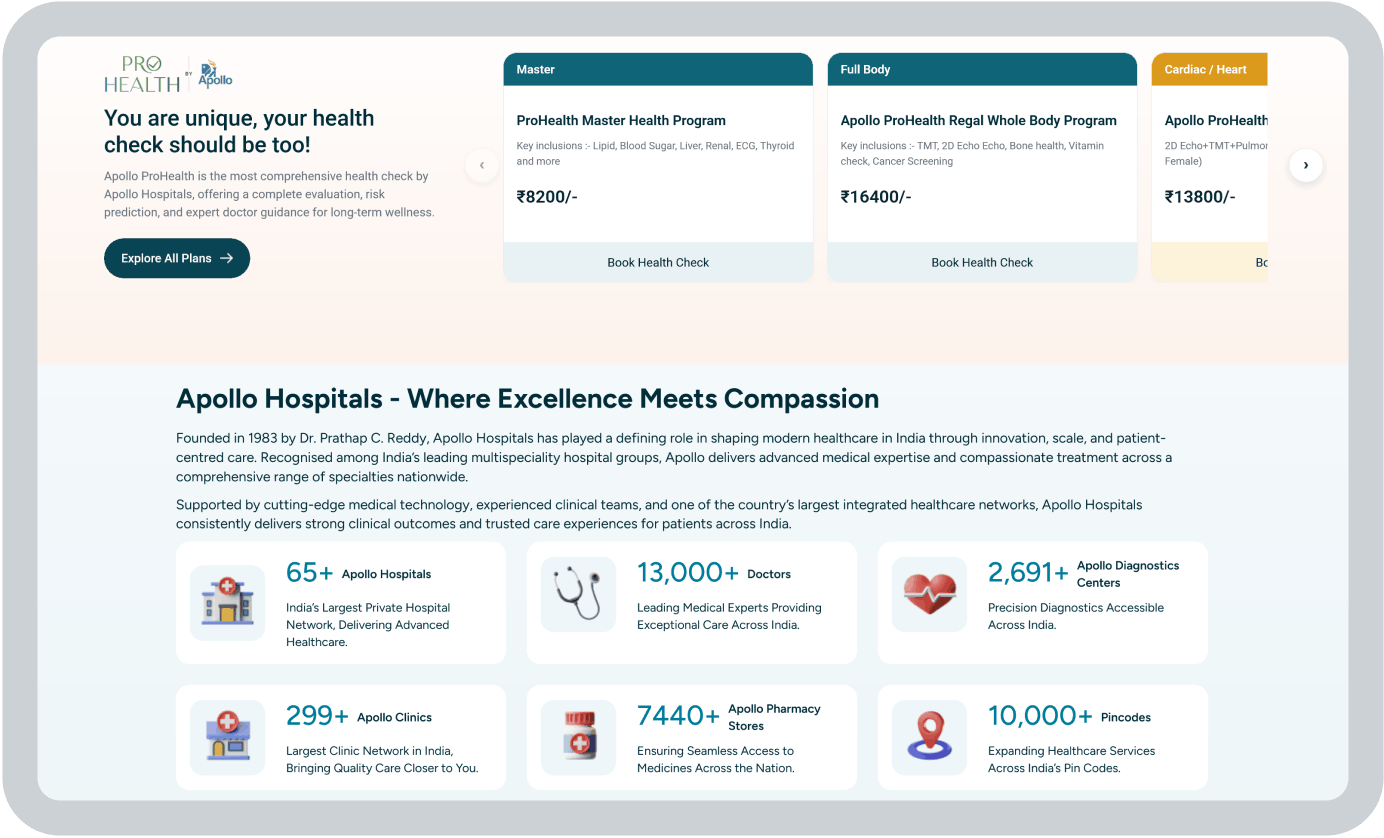
Every source site had its own structure. That made this harder than a standard website migration.
- Field-by-field mapping: Each regional site's content was mapped into the new shared model. Fields that meant the same thing under different names on different sites were brought together into one.
- Data cleansing: Inconsistent and duplicated content from the old sites was standardized during migration, so the new platform started with a clean content base.
- Post-migration validation: Migrated content was reviewed against the source sites to make sure pages, profiles, and relationships carried over intact.
API-first integration with Apollo’s backend
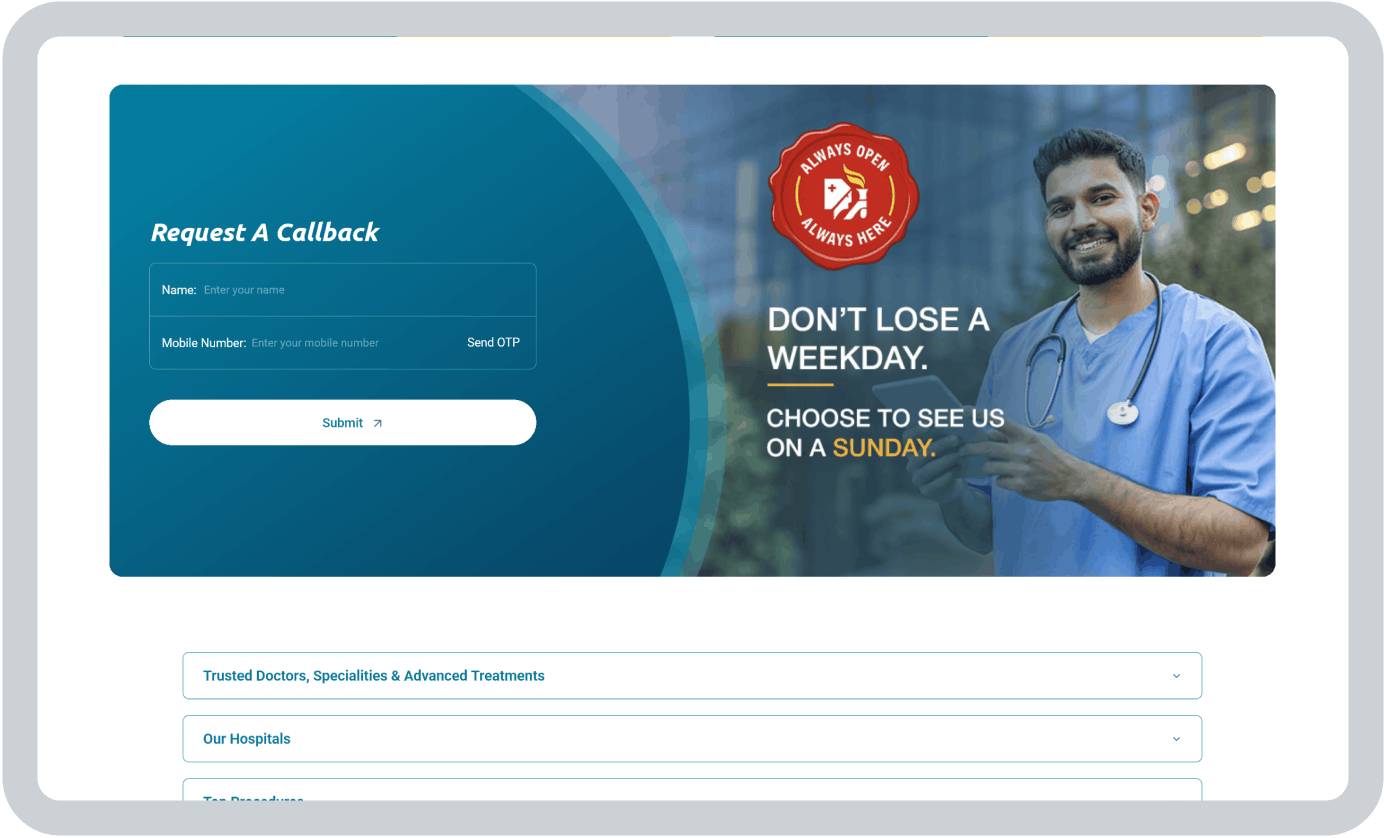
Apollo already had systems that handled bookings, packages, and leads. Rebuilding that logic in the CMS would have added risk and time. Specbee connected Drupal directly to the APIs Apollo exposed.
- Appointment booking: Patients pick a doctor and book a consultation on the website. The request goes straight to Apollo's booking system through its API, so availability and confirmations come from one source.
- Health package booking: Patients compare health check packages and start a booking in the same session. Package details and booking requests run through Apollo's existing package APIs.
- Lead capture to CRM: Every enquiry, callback, and contact form sends its data to Apollo's CRM through an API. Leads reach Apollo's teams without manual exports or copy-pasting.
- Reuse over rebuild: Because Drupal calls Apollo's systems instead of copying their logic, any change Apollo makes to booking or CRM rules applies on the website automatically.
Enterprise Search with Apache Solr
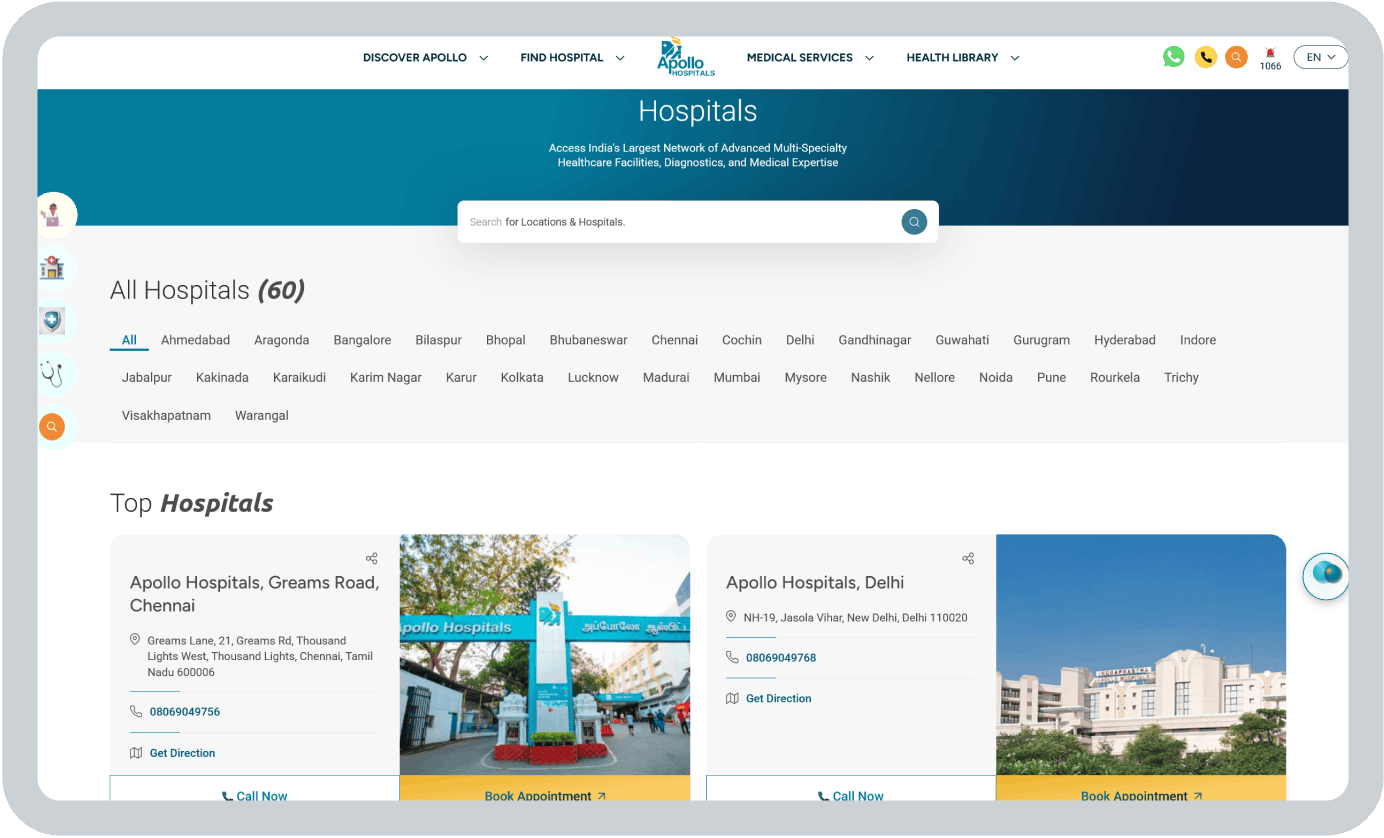
With thousands of doctors, specialties, and locations, search is how most patients find their way.
- Indexed across content types: Solr indexes doctors, hospitals, specialties and treatments together, so one search box covers the whole site.
- Relevance tuning: Ranking rules were configured so the most useful results for a patient's query surface first.
- High-traffic performance: Solr returns results quickly across a large content base and handles heavy traffic better than default database search.
Role-based governance by region
Each region got its own roles and permissions in Drupal.
- Region-specific roles: Users are assigned to their region. They can create, edit and publish only that region's content.
- Strict regional boundaries: A content editor in one city cannot see or change another city's pages. This prevents accidental edits across regions.
- Central oversight: Apollo's central team keeps visibility of the whole platform. Ownership of every page is clear, and the site stays consistent while regions work independently.
Privacy by design
The website handles appointment and enquiry data every day. None of it is stored in Drupal.
- Zero PHI in the CMS: Form submissions and booking details are passed to Apollo's backend systems and not saved on the website.
- Secure API transfer: Data moves from the website to Apollo's systems over secure API connections.
- Reduced attack surface: A CMS-level incident has zero patient data to expose. Sensitive data stays inside Apollo’s own systems.
Background
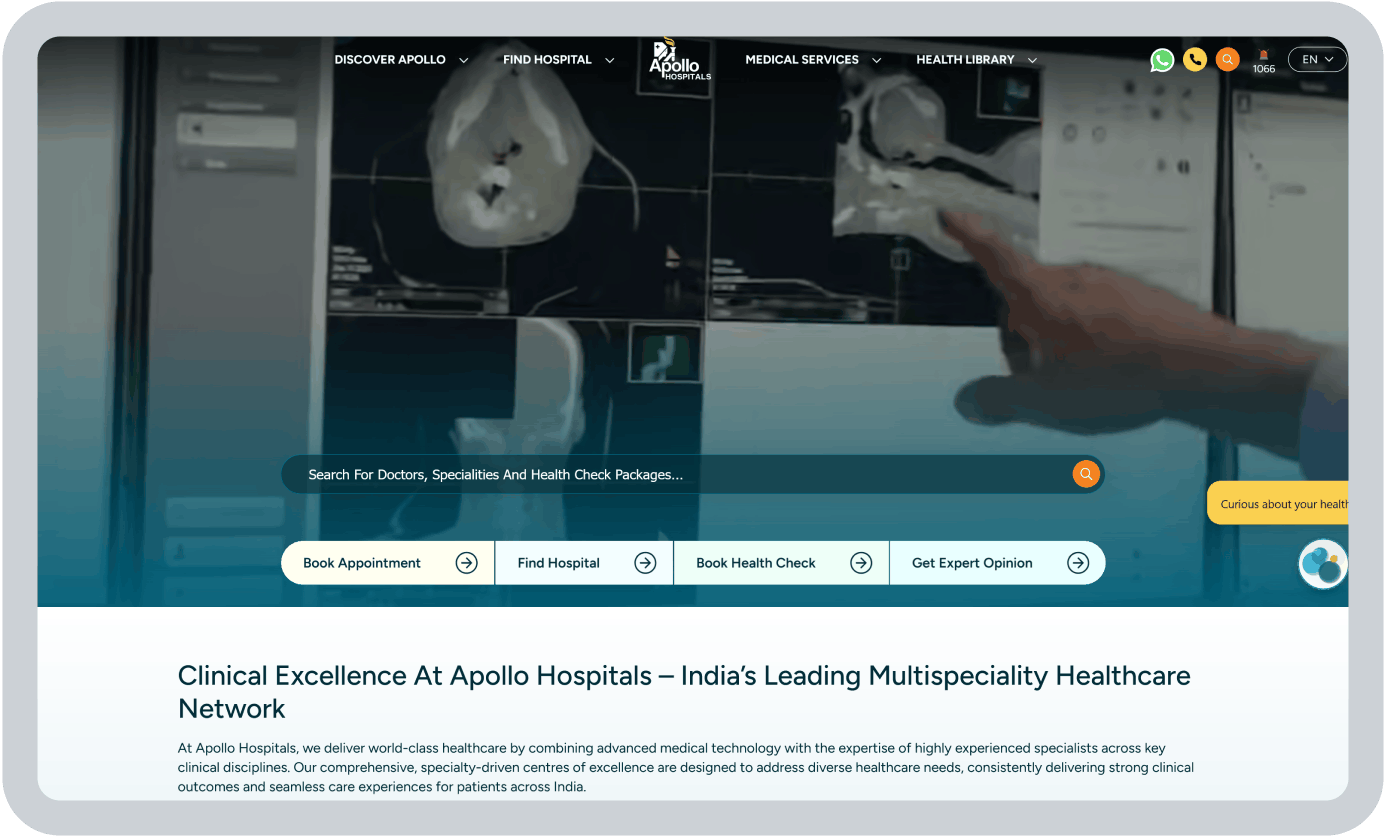
Apollo Hospitals is one of India's largest healthcare groups.
Its website serves patients across Indian cities and international patients looking for treatment in India.
For years, each region ran its own website. Each of 16+ city sites had its own team, page structure, and way of managing content. Apollo had already moved all of them under one domain. That solved the address. It did not solve the platform underneath.
Apollo brought in Specbee to audit the estate, select the right CMS, and consolidate 16+ regional sites into one platform with regional autonomy.
Key Insight
Merging domains is a weekend job. Merging content models is the real project.
The platform went live within Apollo’s three-to-four-month window. It now carries 14M+ monthly visits across 16+ regions on a single Drupal codebase.
The Results
Enterprise scale on a single governed codebase
The platform went live within Apollo’s three-to-four-month window. It now carries 14M+ monthly visits across 16+ regions on a single Drupal codebase.
| Metric | Before | After |
|---|---|---|
| Platform | WordPress | Drupal |
| Content structure | Different for each city site | One shared model across 16+ regions |
| Governance | Siloed teams on separate sites | One platform, role-based access per region |
| Bookings and leads | Varied by site | API integrations with Apollo's booking and CRM systems |
14M
Monthly visits after launch
16+
Regional sites on one Drupal platform
1
Shared content model for every city
4
Months from kickoff to launch





Work With Us
Talk to the team that delivered this
Most conversations start with a 30-minute call and a look at where you are today. No pitch deck. No pressure. Just clarity on what the right path forward looks like for your platform.
Typically respond within 1 business day · 100% Drupal-focused team · No generalists