
Enhancing Drupal front end performance through Pattern Lab
Component-driven theming is becoming widely popular today because of various reasons. The most significant being reusability and portability of components. Pattern lab is a front-end framework that uses an atomic design architecture to implement a component-based design. In this article, we will discuss more about Pattern Lab and how you can enhance your Drupal frontend performance with it.
What is Pattern Lab?
Think of Pattern Lab as an application that can help you organize your UI components in a pattern-driven approach. It is basically a static site generator that binds together all the UI components together. Pattern lab uses atomic design to accelerate the process of creating modular designs. It starts out really basic and gets more complex as you move up the ladder.

Credit: Pattern Lab
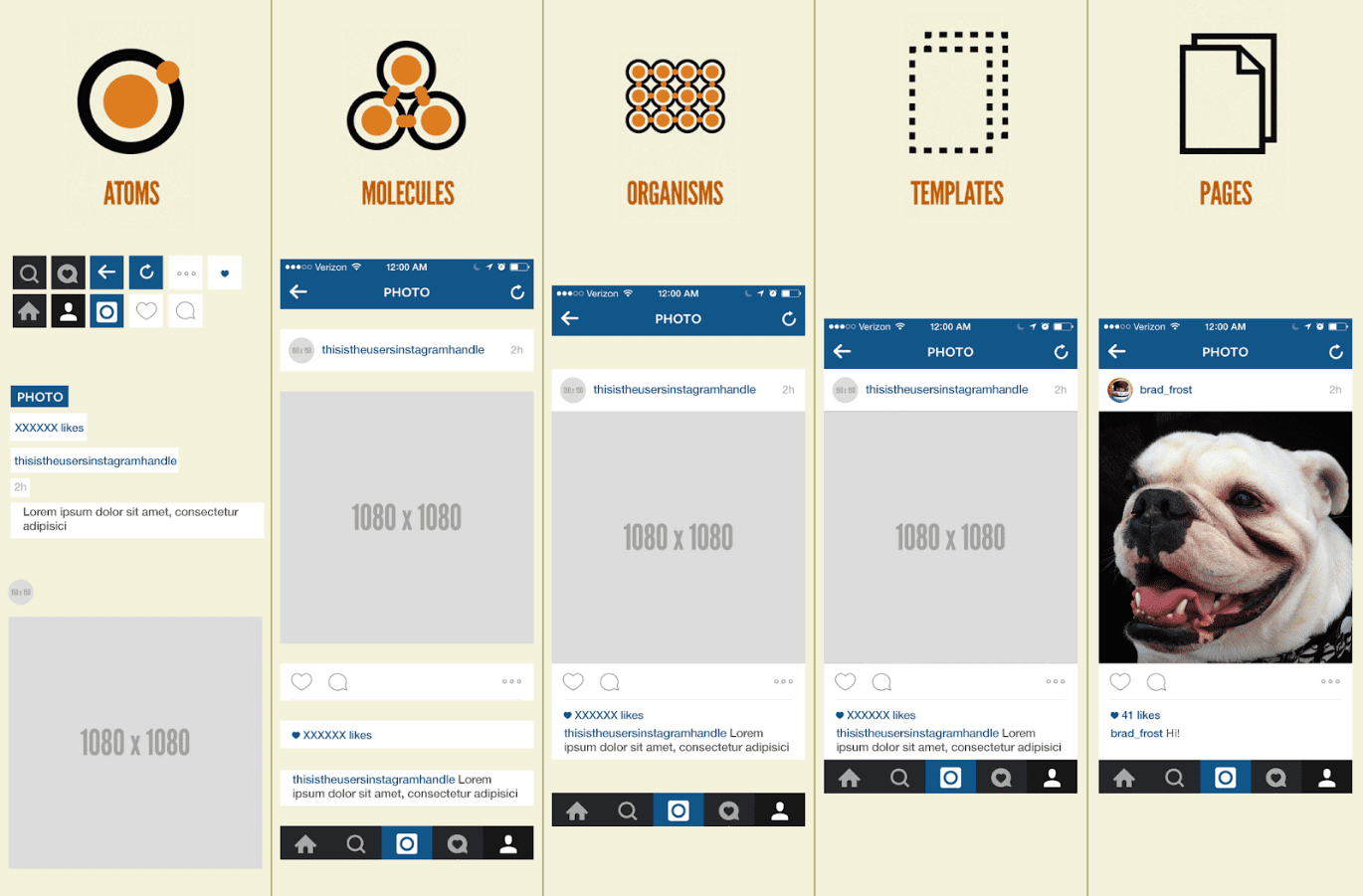
Let’s breakdown these visual building blocks:
Atoms: They are the most basic building blocks of your design. For example, UI elements like buttons, search fields, form elements, labels.
Molecules: They are groups of atoms that work together to perform a particular action. For example, a search navigation that involves a combination of atoms like a search button, a search field and a label.
Organisms: Organisms are molecules and atoms grouped together to define sections of the application. They’re more complex and have more interactions. For example, a header, a footer or a related blog post section.
Templates: Groups of Organisms form Templates. They are placeholders for organisms. For example, a blog page template, login page template or a shopping cart page template.
Pages: When you combine a template with real content, you get a page.
Credit: Pattern Lab
Why should you use Pattern Lab?
Patten Lab makes frontend developers work an absolute pleasure. This is because it allows rapid design prototyping with demonstrable interface and interactivity.
It allows developers to maintain code consistency, implement and leverage reusable components and allows multiple developers to work at the same time. All of these benefits help in easy maintenance of the code.
In terms of Drupal, frontend developers can start their work independently without the dependency on Drupal development. We can work faster and with more consistency than ever before.
Patten Lab with Drupal
Integrating Pattern Lab with Drupal has many benefits and can improve and fasten frontend development. Thanks to the Drupal community, we now have a contributed theme Emulsify Drupal that comes with inbuilt the Pattern Lab architecture. This reduces the extra development effort of achieving a Pattern Lab integration.
Creating a Heading atom in Pattern Lab
For a better understanding of implementing Pattern Lab in Drupal, let’s take an example of creating a Heading atom and integrating it in Drupal Twig template.
Heading atom directory

In the atom directory we will have 3 required files.
_heading.twig : The heading markup will go in this file
_hading.scss : This is for heading style
heading.yml : This is for static data to be passed in twig
Heading atom Twig
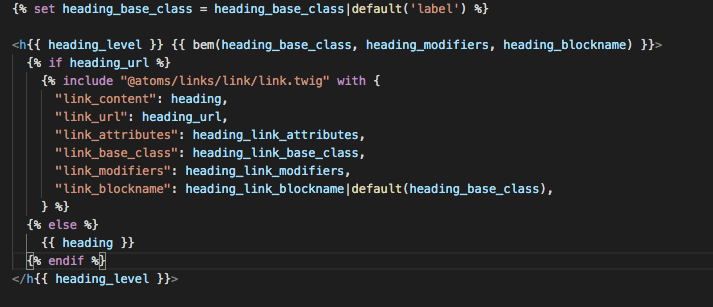
_heading.twig
In Heading twig, we can add the element markup with all the required attributes as variable. We can pass data from yml file or drupal field data with these variables.
Heading.yml / Heading.json
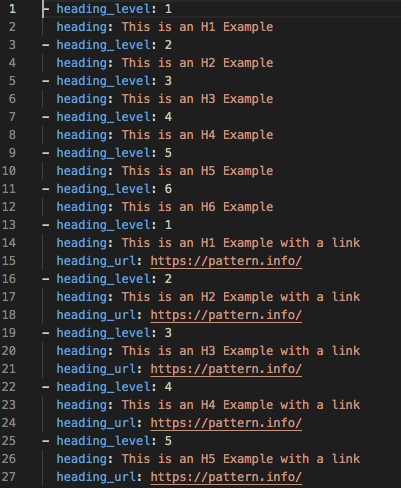
heading.json
This is an example of a json file containing static data for the variable available in the _heading.twig file.
Integrating Heading atom in Drupal template with field values
Here, we will be overriding the page template and integrating it with the heading atom.
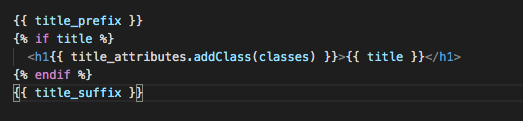
Default bartik page-title.html.twig
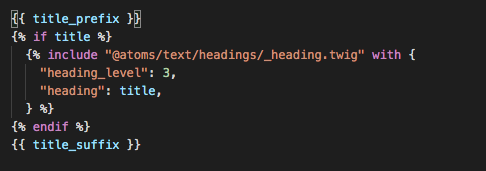
Pattern Lab Heading atom integrated in page-title.html.twig
Here, in page-title.html.twig, instead of the default H1 element we are importing the heading atom as reusable element and adding Drupal field value to the defined variable in the heading atom - heading_level and heading.
Using the same pattern, we can create engaging Drupal websites using Pattern Lab.
I hope this article encourages you to start using Pattern Lab with Drupal using the Emulsify Drupal theme and play around with atoms, molecules, organisms, templates and pages to create compelling websites. If you need assistance with your Drupal development needs, our Drupal experts are just a call away. Contact us today.
Last updated on October 7, 2026
About the author
Vinit Kumar
Read more about Vinit Kumar

How we patched 30+ enterprise client sites for a Critical PHP Vulnerability within 24 Hours (and what we found when we looked back)
Everyone’s talking about the 9.2 PHP vulnerability that dropped on a Wednesday evening. We patched 30+ Drupal sites in 24 hours with zero downtime. Here’s what our audit found next.
5 min read

Why (and how) government agencies should migrate from DNN to Drupal
Planning a DNN to Drupal migration? See how Drupal helps government agencies meet WCAG 2.1 AA, Section 508, and ADA Title II rules with stronger web governance.
8 min read

How to display image galleries with thumbnail navigation in Drupal
Need better image galleries in Drupal? The Media Scroller module adds a large main image, synced thumbnail navigation, and simple configuration without custom templates.
11 min read