
How to get your content picked by AI Answers (Not just ranked by Google)

For ages now, search was straightforward - you rank higher, attract more clicks, and build your traffic.
But today, that’s not enough.
As a user, you’re not simply searching, you’re asking questions. And rather than running through links, you seek AI-powered tools for direct answers in seconds.
This is the shift in search that has redefined visibility.
Because now, your content can’t stop at ranking; it has to be chosen.
In this blog, I will highlight the difference in the search model and how AI now dominates the way your content shows up, and how you can get your content to be chosen by AI search results.
What has shifted in search behavior with AI?
Search has evolved from exploration to resolution.
Earlier, you had to compare multiple sources to land on a decision. Now, LLMs (Large Language Models) summarize that information and present it in a single, confident response to make things easier for you. In most cases, the user journey ends right there.
The role of your content changes here.
Now, instead of competing to get more clicks, you need your content to influence the answer itself. And only a limited number of sources make it into that direct answer.
Why does AI ignore high-ranking content?
Let me be clear here: rather than ignoring it, AI search sets a higher bar for getting your content noticed.
This is where most brands struggle to connect.
Your content might secure the top spot and still not get recognized as AI-generated responses.
Why? Because AI tools require more than just ranking. They prioritize usability.
What does AI evaluate instead?
AI tools are designed in a way that filters content based on its usability to construct a direct answer. This is what they look for in your content:
- Clarity of response - Does your content directly and clearly answer user queries?
- Structural simplicity - Is the information in your content easy to extract and summarize?
- Credibility signals - Does your content demonstrate expertise and reliability?
- Contextual completeness - Does your content cover the topic in a valuable and well-rounded way?
If you analyze your content and find any of the above priorities missing, it’s unlikely for it to be selected by AI, no matter how well it might rank.
How do AI tools choose content to cite?
AI models today follow an advanced system of search experience optimization that goes beyond indexing and ranking. These models retrieve information, evaluate relevance, and synthesize insights into a usable response.
Simply speaking, AI tools select sources that can be trusted to build an answer.
Here’s how AI evaluates pick-worthy content
- It looks for content with semantic alignment with intent, and is not limited to keywords.
- Your content must follow a logical structure that makes it easy to interpret and extract.
- AI tools trust consistent topical authority built over time.
- There must be factual accuracy in your content, backed by data or examples.
Bear in mind that content that purely targets keywords will not get the attention in AI environments. You must go beyond keywords and instead, target to achieve depth and clarity through your content for AI synthesis.
What is AI SEO? Why does it matter today?
With the shift in search that we discussed above, AI SEO is what comes as the solution.
AI SEO, or AI Search Optimization, or even AEO (Answer Engine Optimization), defines the practice of creating AI-ready content. This is the type of content that is discoverable, understandable, and usable by AI tools.
It adds a new layer of optimization to traditional SEO practices. Here’s how it differs from traditional SEO:
Traditional SEO helps spot your content, while AI SEO helps choose your content.
This difference is critical as in this AI-driven setup, being found is the first step, followed by being selected. Getting your content selected is what determines if your content can influence the outcome.
What makes your content more likely to be picked by AI?
Next time you visit a search engine and type out a query, keep a close look at the content that AI generates. You’ll find that the content that consistently appears in AI-generated responses follows a pattern - it prioritizes clarity over complexity and userfulness over volume.
Key characteristics of AI-selected content:
- Immediate answers - Content that answers the user’s question immediately without having them or AI search for it.
- Clear & scannable structure - Content with clear headings, sections, and flow that’s easy to navigate and extract.
- Depth with context - Content with topical authority and complete understanding.
- Demonstrated expertise - Content with factual evidence, insights, examples, and supporting data to reinforce credibility.
This is the type of content that informs and translates well into answers, making it more likely to be picked by AI.
How to optimize your content for AI Search?
Making that shift in search with your content is more about structuring your content so machines can confidently extract, validate, and present your answers. It starts with structure and extends to build authority. Here’s how you can optimize your content for AI Search:
Start with a clear, answer-first format
AI systems hunt for content that answers queries immediately. Open every significant section with 2-3 lines forming the direct answer. Support those lines with an explanation. Use AI format for ease of recognition, such as: “What is X?” - “X is….” or “How to do N?” - “To do N, follow these steps……”
Structure your content for machine readability
Beyond human readability, you must prepare your content for machine readability. AI parses content patterns. Reduce content ambiguity. Use clear H2, H3 hierarchies, and break your content into consumable paragraphs that are easy to read and understand. Using bullets for lists or steps always works. You could even use question-based subheadings (just like in this particular blog) to align with AEO/GEO trends.
Implement structured data using Schema
This is how you elevate your content from “well-written” to machine-readable. Implement:
- Schema types like -
FAQPagefor Q&A sectionsHowTofor step-by-step guidesArticlefor blogs
- Mark up:
- Questions and answers
- Author information
- Publish/update dates
If you’re working on a Drupal website, things become even easier. Thanks to the Schema.org integration, you can automatically map content types, add structured fields, and ensure consistency across large content ecosystems.
Additionally, our AI-powered Drupal capabilities have proven highly useful in automating schema generation and standardizing structured data at scale and ensuring consistency across enterprise sites. Our approach generates validated JSON-LD and embeds it seamlessly, helping AI engines and search platforms better understand, trust, and surface your content for richer, more accurate results.
Build topical authority via content relationships
AI search prioritizes content that demonstrates depth beyond relevance. Build your content strategically with content clusters like pillar pages and supporting blogs. Implement contextual interlinking using descriptive anchor text (avoid using “click here”). Maintain semantic consistency across articles.
Support claims with verifiable signals for E-E-A-T alignment
AI models value credibility. Make sure your content includes data points and statistics, real examples or case studies, and quotes from credible sources to demonstrate value.
Add author credibility signals like author bio or expertise. Additionally, use outbound links to trusted sources wherever possible.
Keep your content and signals regularly updated
AI tools target current accuracy in content. So, make sure to update the stats and examples in your content regularly. Refresh any outdated sections, and display “last updated on” dates for authority. Another thing SEO experts suggest is re-optimizing older high-performing content instead of always rewriting from scratch.
How to measure AI Search success?
With the evolution of search, the shift also takes place in its key metrics.
Rankings and traffic still play an important role in tracking search performance. However, they don’t give you the complete picture as relevant today. AI-driven search performance is less about ranking and more about being surfaced, trusted, and influencing decisions early. AI Search visibility often happens before a user ever clicks. Make sure to keep track of:
- AI citations and content visibility: Monitor whether your content is referenced in AI-generated answers. Spot patterns in which pages often get picked by AI.
- Measure brand presence in conversational results: Track how often your brand occurs in AI-driven responses. Focus on high-intent queries, as that’s where influence matters the most.
- Understand pre-click influence: Measure signals that shift visibility, such as branded search growth, direct traffic trends, and assisted conversions.
- Use tools updated for AI search tracking: Use tools like SEMrush, Scrunch AI, Ahrefs, Google Search Console, etc., to track keyword trends, brand visibility, SERP features, and monitor how your content appears in AI-generated answers, analyze backlinks, content authority, and identify query-level performance, etc.
What does the future of SEO look like in an AI-first world?
SEO cannot disappear, but surely, it can keep evolving (like it already is).
The foundation holds strong with technical performance, crawlability, and discoverability. What adds to all of that is a new layer of clarity, authority, and usability.
The modern search strategy must place you in the competition. And to win in that competition, your content must:
- Use strong SEO fundamentals to be discoverable.
- Implement a clear structure and intent to be understandable.
- Build consistent authority to be trustworthy.
- Be optimized strategically to be selectable through AI SEO.
Today, the goal in search isn’t to secure a place among many options but to be THE answer.
Final thoughts
The shift from ranking to getting chosen extends the visibility game to an influence game.
Google rankings have always helped you get discovered. Now, AI selection determines whether your content can shape user decisions.
And in an AI environment where only a few sources make it to the final answer, this distinction is important.
If your content isn’t structured to be selected, it won’t be visible to AI responses, no matter the rank.
At Specbee, we approach SEO with an AI-first strategy. From structuring your content for AI comprehension to improving its chances of being cited, our team of AEO/GEO experts is here to assist you. Let’s get your content chosen first. Reach out to us.
Last updated on July 31, 2026
About the author
Priyanka Phukan
Meet Priyanka, a Marketing Executive at Specbee. Priyanka’s a Grammar-Freak with a knack for creating impactful content with ‘words’ being her weapon of choice. A foodie who likes all things chicken. When not writing, she likes to play the Uke and sing. On blue days, you’ll find her binge-watching Asian dramas.


Is your SEO strategy missing AEO and GEO? Here’s how to keep up
Search is no longer just about rankings. This blog breaks down how AI, AEO, and GEO are changing SEO and what you need to do to stay ahead.
20 min read


How bad tracking affects your data (and what can Google Tag Manager fix)?
Learn how incomplete tracking affects your analytics, why it leads to wrong decisions, and how Google Tag Manager helps create a reliable tracking setup.
15 min read

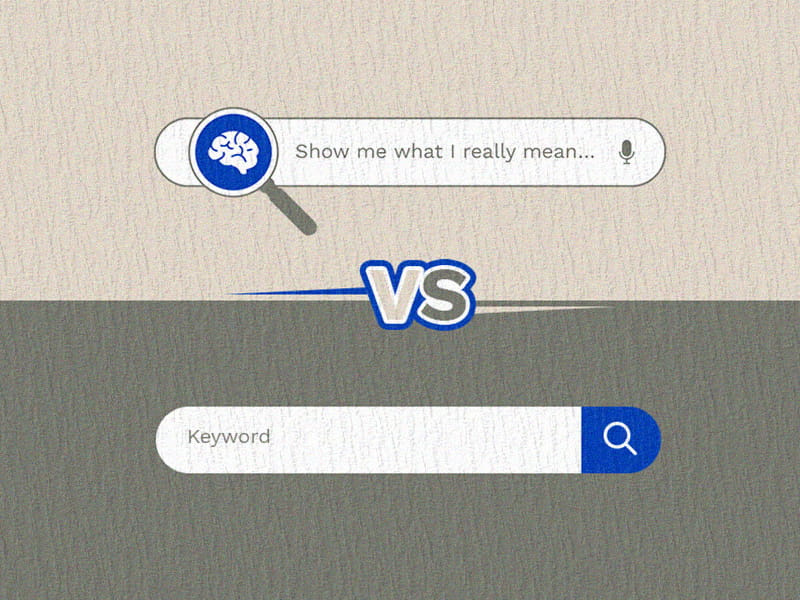
Semantic search VS Keyword search: What’s the difference?
Relying on keyword search alone? Read this blog to add semantic search and AI-powered search terminologies to your SEO dictionary to build smarter, modern enterprise websites.
8 min read