
Why and how to migrate your DotNetNuke (DNN) site to Drupal

First things first, let's talk about why you're here. You've got a DNN website that's starting to show its age, and you're eyeing that sleek, modern Drupal CMS like it's the latest iPhone. OR you just love checking out our blogs 😉
From DotNetNuke to DNN Platform to DNN Evoq, sometimes simply called Evoq, this CMS has seen a series of transformations. Once an extremely popular CMS solution for organizations (mostly enterprise-level), DNN Evoq has faced the inevitable challenge of staying relevant over two decades. It's hard for any software to remain popular for over 20 years, especially with the changing world of web development and content management.
Drupal, despite being older than DNN (okay, a year older), is thriving! Over time, it has only evolved into a more modern, user-friendly, and robust CMS. Moreover, Drupal excels at what it was designed to do: effective content management.
This is not DNN vs. Drupal comparison, though we'll touch on a few reasons to consider the switch. This article aims to shed light on the DNN to Drupal migration process and why you should consider making the move. Additionally, we will share a real case study from one of Specbee's DNN migrations.
Key takeaways
- DNN Evoq has lost community momentum and runs on aging technology. Drupal is actively developed and built for content management at scale.
- Drupal 11 is the current release. A DNN migration lands you straight on it, so you skip the version catch-up an existing Drupal site would face.
- Drupal 12 arrives the week of December 7, 2026. Moving from Drupal 11 to 12 later is a routine upgrade, not another migration.
- A DNN to Drupal migration runs in four stages: audit, build, content migration, and testing.
- Specbee migrated three DNN magazine sites for Stamats onto a single custom Drupal distribution, cutting time to launch a new site by roughly 10x.
Why should you migrate from DNN Evoq to Drupal?
To those who need to know some history of DNN, it was created by Shaun Walker and launched in late 2002. Written in C#, DNN is open source and relies on .NET framework and ASP.NET Web Forms. DNN soon became a platform known for its extensibility and seamless scalability which also brought in a lot of consultants and agencies to offer DNN development services.
However, over the years, DNN has experienced significant changes. The 2009 shift to the ASP.NET MVC model, along with a series of acquisitions, coincided with a decline in its user base and community support. As Microsoft moved development to the unified .NET stack, DNN leaned on older Web Forms technology and fell behind modern tooling. That made it a harder platform to bet on for the long term.
Now, why should you consider moving to Drupal, especially Drupal 11?
- Active and Vibrant Community: Drupal has one of the largest open-source communities. This means continuous improvements, a wealth of modules and themes, and a support system that's always buzzing.
- Continuous innovation: Drupal keeps shipping. Drupal CMS, the packaged version that came out of the Starshot initiative, launched in January 2025 and reached version 2.0 in early 2026. It brings Recipes, a Project Browser, Automatic Updates, and Experience Builder, a no-code page builder for marketers and site builders.
- Modern, future-ready foundation: Drupal 11 runs on Symfony 7 and Twig 3. The Claro admin theme and Olivero front-end theme give editors and visitors a cleaner experience out of the box.
- Effective editorial workflow system: With Drupal, end users can easily create and manage workflows tailored to their organization's needs and adjust them on-demand as necessary which is becoming more and more of a demand today. In comparison, DNN's customization options and support for complex editorial workflows often require extensive coding knowledge.
- Scalability and Flexibility: Like DNN, Drupal is known for its scalability. However, Drupal takes it a step further with its flexible content architecture, allowing you to create and manage various content types with ease.
- Security: Drupal is renowned for its strong security track record. The Drupal Security Team actively monitors and addresses vulnerabilities, giving you peace of mind.
- SEO and Performance: Drupal ships with clean URLs, advanced caching, and the markup search engines and AI answer engines read well. Your content is built to rank and load fast.
- Accessibility: Drupal is committed to web accessibility standards, ensuring your site is usable by everyone.
- Extensive Ecosystem: With thousands of modules and themes, Drupal offers a vast ecosystem to extend your site's functionality without reinventing the wheel.
By switching to Drupal, you're stepping into a future-ready, secure, and highly customizable environment. It's a move that can significantly improve your digital presence and provide a solid foundation for growth.
Should you move to Drupal 11 now or wait for Drupal 12?
A fair question, given Drupal 12 is close. Here is the short version: migrate now.
Drupal 12 releases the week of December 7, 2026. Drupal 10 reaches end of life two days later, on December 9, 2026. A DNN migration is a fresh build, so it lands you on Drupal 11, the current release, with full support ahead of it.
Waiting for Drupal 12 buys you nothing. There is no direct path from any older platform straight to Drupal 12. Every site moves through Drupal 11 first, so Drupal 11 is where a DNN migration goes either way.
The upside comes later. The Drupal 11 to 12 upgrade is a routine step, not a rebuild, because the release cycle is designed to keep major upgrades light. You migrate off DNN once, then future Drupal upgrades stay small.
How do you prepare for a DNN to Drupal migration?
Before you begin your DNN to Drupal migration, we recommend reading this article to find out how you can audit your site yourself, regardless of the version. A migration is also a perfect time to add those extra features or third-party integrations you've always wanted. Additionally, it's a great opportunity to revamp your website's design and user experience too. Consider your website’s current SEO positioning and how you would like to optimize it.
Once you've considered everything, create a backup of your website to avoid any accidental changes or data loss. Next, make a checklist of your content structure, including content types, URLs, metadata, and media files. After this, let the Drupal migration experts take over.

How does the DNN to Drupal migration process work?
Here’s a 4-step migration process that is (or should ideally be) followed by your Drupal migration partner:
1. Migration Audit
- Identify your DNN website features, functionality, modules, and content structure
- Conduct a detailed analysis to understand the digital landscape
- Catalog content views for easier replication
- Develop a strategic content migration strategy
2. Build Application
- Meticulously rebuild content structure and theme
- Replicate website features, add new features
- Conduct thorough regression testing
- Ensure a solid foundation, seamless functionality, and flawless performance
3. Migrate Content
- Content extraction from your database in a CSV, XML or JSON format
- Ensure a seamless transition from DNN to the latest Drupal version
- Import all contents and valuable assets, match them with the freshly created content types and fields
- Meticulously validate the entire data migration process for data accuracy and completeness.
4. Testing
- Thoroughly test migrated data for sanity and integrity.
- Subject replicated features to smoke testing and load testing.
- Guarantee seamless performance under various scenarios.
- Conduct meticulous security checks.
Watch this video of our step-by-step Drupal migration process, regardless of the CMS you are coming from.
A DNN to Drupal migration case study
The client (Stamats) approached us with a two-fold issue. They had three magazine sites on a legacy version of DNN that was riddled with malware and needed major work for the migration to Drupal. Among those sites was MeetingsToday.com.
Meetings Today was several years old, and had more than 20,000 articles in DNN. There was also extensive functionality related to their physical magazine, events, podcasts, webinars, and more. Their primary goal was to retain and grow their audience. They were experiencing issues with editing, and an uncertain future. The challenge came to Specbee to create a Drupal distribution that could serve the core publishing needs of several online magazine sites built in DNN.
So we built a custom Drupal distribution to save them time and money in the long term. This approach allowed any new feature developed for one site to be easily implemented across all sites while preserving their unique designs. It also gave them the ability to spin up a new publishing site without building a brand new website from scratch getting them to market 10x faster.
Specbee delivered a solution that allowed for Drupal's powerful editorial controls and publishing tools for multiple sites while allowing those sites to retain their unique functionality.
References
- https://devessence.com/blog/!/22/what-is-your-dnn-migration-strategy/
- https://www.dnnsoftware.com/community-blog/cid/134716/asp-net-mvc-and-dotnetnuke
- https://www.linkedin.com/in/shaunbrucewalker/
Final thoughts
We understand that migrations are never an easy decision for any business. While entrusting a reliable technology partner can alleviate some concerns, it's crucial to dedicate your attention and time before handing over the reins. By choosing the right Drupal partner (such as Specbee), you can streamline the migration process, making it as seamless and painless as possible. Still wondering if you should migrate your DNN website to Drupal? Give us a call and we’ll help you make the right decision.
Frequently Asked Questions
How long does a DNN to Drupal migration take?
A typical DNN to Drupal migration runs from a few weeks to a few months, set by content volume, custom functionality, and integrations. A small brochure site moves fast. A publishing platform with tens of thousands of articles, like the Stamats magazines, takes longer. A migration audit gives you a firm timeline before any work starts.
Will I lose my content when migrating from DNN to Drupal?
No. Content, media, and metadata are extracted from your DNN database as CSV, XML, or JSON, then mapped to matching Drupal content types and fields. Every item is validated against the original for accuracy and completeness. A structured migration carries your content across intact, along with your URL structure and SEO signals.
Is DotNetNuke (DNN) dead?
DNN still exists and still receives updates, but its community and momentum have thinned since the platform's peak. Its reliance on older ASP.NET Web Forms technology makes it harder to keep pace with modern web development. For teams planning long-term growth, an actively developed platform like Drupal is the safer foundation.
Should I migrate to Drupal 11 now or wait for Drupal 12?
Migrate now. Drupal 12 releases the week of December 7, 2026, and a DNN migration lands you on Drupal 11, the current release, either way. There is no shortcut path straight to Drupal 12. Every site moves through Drupal 11 first, and the later 11 to 12 upgrade is a routine step, not another migration.
How much does a DNN to Drupal migration cost?
Cost depends on your site's complexity, content volume, and the features you need rebuilt. Every DNN site is different, so a fixed range rarely fits. The most reliable path is a migration audit, which maps your content and functionality and returns a tailored quote. Specbee's initial migration audit is free.
Will I keep my SEO rankings when moving from DNN to Drupal?
Yes, when the migration is handled properly. URL structures, redirects, metadata, and structured data are mapped and preserved through the move, so search equity carries over. Drupal's clean markup and caching often improve performance and rankings after launch. Treated as its own workstream, SEO makes a migration a step up, not a setback.
Why choose Drupal over DNN?
Drupal offers a larger active community, a deeper module ecosystem, stronger editorial workflows, and a modern foundation on Symfony 7 and Twig 3. It is built for flexible, large-scale content management and holds a strong security and accessibility record. For enterprise content teams, Drupal gives more room to grow without a rebuild every few years.
Last updated on September 3, 2026
About the author
Shefali Shetty
Meet Shefali Shetty, Director of Marketing at Specbee. An enthusiast for Drupal, she enjoys exploring and writing about the powerhouse. While not working or actively contributing back to the Drupal project, you can find her watching YouTube videos trying to learn to play the Ukulele.

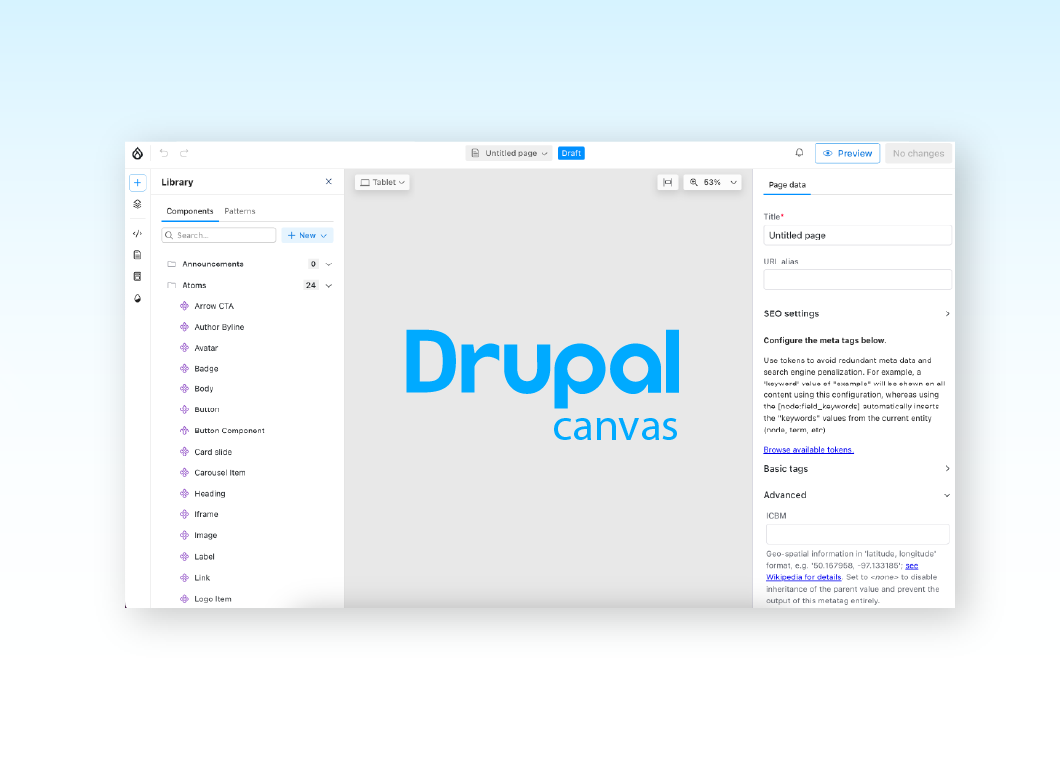
Getting started with Drupal Canvas: A frontend developer's first look
Wondering why Drupal needs another page builder? Here's what I learned installing Drupal Canvas, exposing my SDCs, and writing React right in the browser.
12 min read


Canvas Page Metatag Module: How to restore full SEO controls to Drupal Canvas pages
Drupal Canvas hides most Metatag fields behind one SEO title box. Check out how Canvas Page Metatag restores them and fixes a Robots checkbox bug.
11 min read

Specbee is now a Drupal AI Initiative Partner. What does it mean for your platform?
Specbee has joined the Drupal AI Initiative as a Certified Partner. See what Drupal AI initiative is about, how it's governed, and what it means for your enterprise site.
5 min read